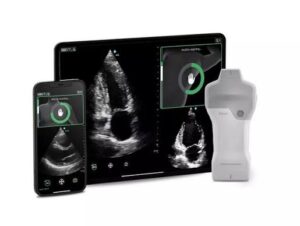

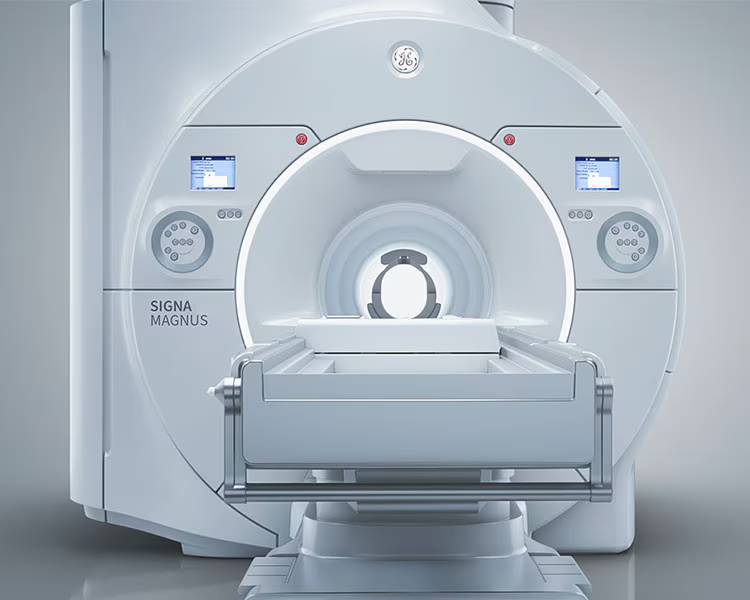
GE HealthCare’s Technology & Innovation Center (HTIC) conducts exploratory and translational research focused on addressing healthcare challenges through federal funding, academic collaboration, and private-sector research and development.
HTIC’s mission is to support GE HealthCare’s long-term research and development efforts by advancing technologies for future innovation. Research programs are conducted in collaboration with clinicians, academic institutions, and government agencies, with alignment to societal needs and national priorities.
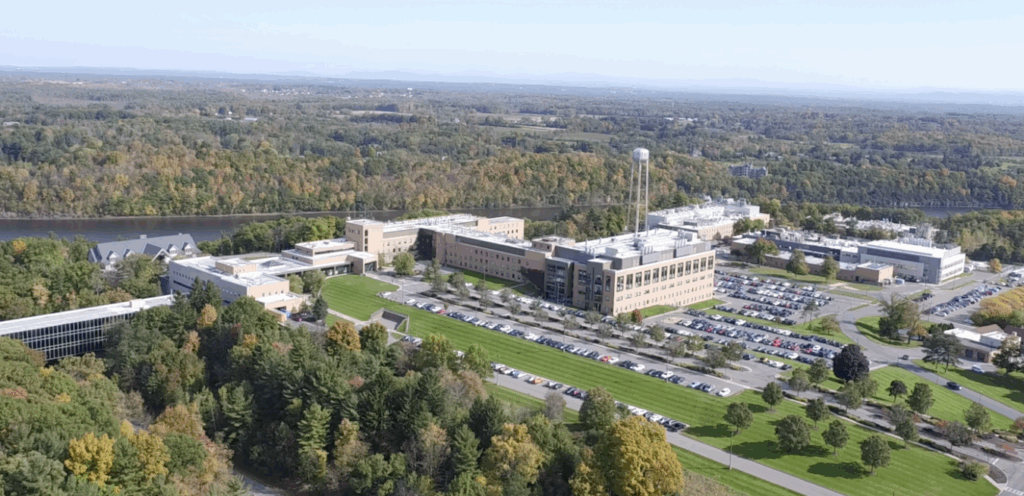
With research teams based in Niskayuna, NY (USA) and Bangalore (India), HTIC contributes to research efforts supporting public health, defense health initiatives, and GE HealthCare strategic research programs.
1. HTIC has an established record of participation in federally funded research programs
HTIC conducts a broad portfolio of federally sponsored healthcare research, serving as both a prime contractor and collaborator. Programs supported by agencies such as NIH, ARPA-H, BARDA, DARPA, and the U.S. Department of Defense span areas including medical imaging, AI-enabled data analysis, wearable biosensing, and non-invasive therapeutic research.
Research efforts address a range of health challenges, including oncology, cardiovascular disease, infectious disease, neurological conditions, trauma care, and maternal and infant health. HTIC works with academic and clinical collaborators to support scientific rigor and translational relevance, with the goal of informing future research and technology development.
“Our work begins with identifying unmet clinical needs and addressing foundational scientific challenges, while considering scalability and real-world applicability,” says Russell Heinrich, Vice President of Research at HTIC. “This approach has supported long-standing collaborations with government agencies focused on advancing healthcare research.”
2. HTIC researchers contribute to peer-reviewed publications and scientific forums
HTIC researchers regularly publish in peer-reviewed scientific journals and present findings at professional conferences, including RSNA, SPIE Medical Imaging, HIMSS, and meetings of the Human Biomolecular Mapping Consortium.
Examples of recent peer-reviewed publications include:
• Ultrasonographic Optic Nerve Sheath Diameter Technical Pitfalls and Imaging Artifacts
Journal of Ultrasound in Medicine: An analysis of ultrasound imaging artifacts that may affect optic nerve sheath diameter measurements used in intracranial pressure assessment.
• Simultaneous coherent–incoherent motion imaging in brain parenchyma
Interface Focus: Research describing phase-sensitive diffusion tensor MRI methods to observe low-velocity fluid motion in brain tissue, with relevance to neurological research.
• A multimodal analysis of CT radiomics and clinical variables in predicting immunotherapy response for NSCLC
Journal of Clinical Oncology: A study evaluating AI-based models for predicting immunotherapy response in non-small cell lung cancer, with results reported within the study population.
• SwinDAF3D: Pyramid Swin Transformers with Deep Attentive Features for Automated Finger Joint Segmentation in 3D Ultrasound Images
Bioengineering: Description of a deep learning approach for automated joint segmentation in 3D ultrasound datasets used in rheumatoid arthritis research.
HTIC also collaborates with academic partners, contributes to shared datasets where appropriate, and participates in international research consortiums.1
3. HTIC advances medical imaging research through clinician-informed collaboration
HTIC’s research methodology emphasizes early clinician engagement to help identify unmet needs and guide technical exploration. This collaborative approach informs research programs across imaging hardware, software, and data science.
Examples of clinician-informed research initiatives include:
• MRI System Architecture Research
HTIC research has explored compact MRI system designs, including investigations into reduced system mass and helium requirements through alternative cryogenic approaches. Investigational systems, including compact 3T and higher-field designs, are evaluated in research settings.
• CT Motion Correction Algorithms
Software-based cardiac motion correction techniques have been developed and evaluated in research settings to address motion artifacts without increasing mechanical system stress. Observations have been reported in peer-reviewed and internal research evaluations.
• High-Performance Gradient Research
Gradient insert technologies, such as the MAGNUS research platform, have been evaluated for high gradient strength and efficiency to support advanced neuroimaging research, including low-velocity fluid motion analysis when combined with experimental imaging methods.
• Machine Learning for Treatment Response Research
In collaboration with academic medical centers, HTIC researchers have studied AI-based models analyzing tumor and peritumoral features to explore associations with immunotherapy response. Reported findings are limited to research cohorts and investigational use.
These efforts reflect cross-disciplinary collaboration spanning superconducting magnetics, AI, biosciences, electronics, and imaging physics, and are conducted as research activities rather than commercial product claims.
HTIC integrates federal investment, academic partnerships, and private-sector research execution to support long-term technology exploration. With over a century of research heritage and expertise across multiple technical domains, HTIC contributes to ongoing advancements in medical imaging science.
“With continued advances in AI, computational methods, and materials science, we see expanding opportunities to address complex clinical research challenges,” Heinrich adds. “Our collaborations help translate emerging science into insights that may inform future healthcare technologies.”
- Note: Publication findings represent research results only and do not constitute commercial claims or regulatory-cleared product performance. ↩︎