

Health systems are under tremendous stress. They face capacity constraints due to the rising demand for care as the population ages, incidence of chronic disease grows, and inpatient acuity and complexity increase.
These capacity challenges affect health system operations, putting pressure on leaders to optimize staffing, maximize the use of physical space, and increase throughput.
As they implement initiatives to optimize capacity, many health system leaders are also considering capital investments to add capacity. With the stakes high, they feel tremendous pressure to get prioritization and investment decisions right.
This isn’t easy.
Delivering consistently high-quality healthcare is uniquely complex. Health systems often operate multiple sites of care, with different service lines for patients with different diseases and varying levels of acuity. Just getting each patient to the right site of care can be challenging.
The complexity is amplified when a patient is hospitalized. Research has shown that a single case can involve as many as 20 different health professionals during an average hospital stay, including specialists, nurses, technicians, pharmacists, transporters and others. And because the patient flow is non-linear; there are interdependencies and “ripple effects,” as even small operational changes can have outsized effects.
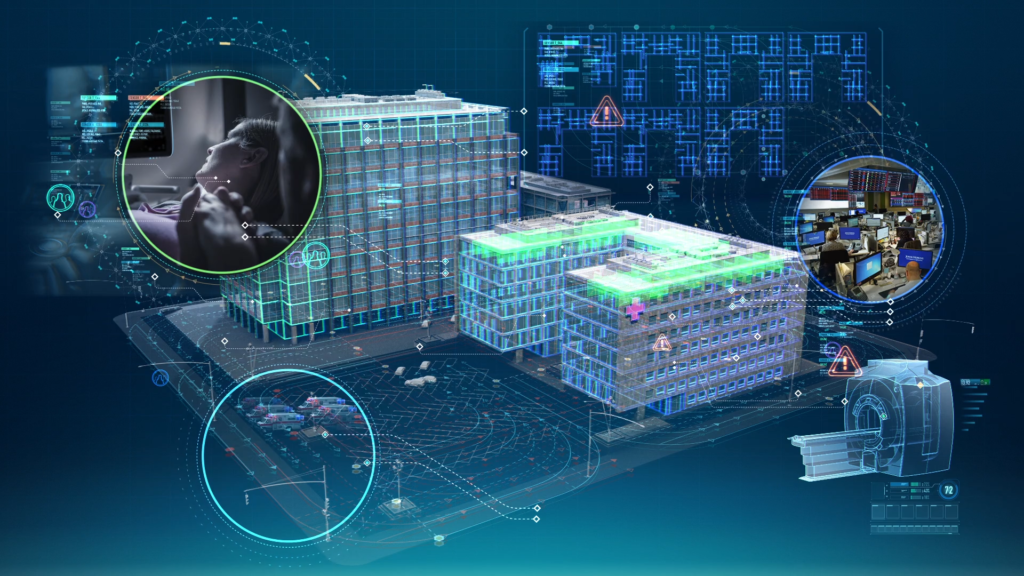
Recognizing the limitations of these traditional options for the unique challenges of healthcare, GE HealthCare purpose built an industrial-grade digital twin simulation engine.
Our new white paper on Becker’s Hospital Review outlines how hospital systems are using GE Healthcare’s digital twin empowers to make data-driven decisions by testing different scenarios in a safe, digital environment.
The digital twin enables leaders to explore how changes to operations, resources, facility design, and staffing ripple through an interdependent health system.
Whether leaders are preparing for seasonal surges, optimizing existing workflows, or evaluating new investments, GE HealthCare’s digital twin translates “what if” questions into measurable projected outcomes.